Supporting Children with Trauma at School: Signs, Misconceptions, and Impact
Trauma affects a child’s whole life, from brain development and cognitive functioning to behaviour, emotions, and relationships. This can make school a tricky environment for them to navigate.
Helping children in care do their best at school is a collaborative effort that starts by understanding what trauma looks like in an educational setting, the misconceptions teachers can have, and how trauma responses can differ depending on the child’s age.
This is part one of our two-part series, featuring insights from our in-house Child and Adolescent Psychotherapist, Joanna Jeske, who explores how trauma can affect children at school and the ways teachers and parents can support them.

What are the signs of trauma in children at school?
Trauma in school-aged children does not always look like the things we commonly associate with the word, such as sadness, fear or visible distress.
Childhood trauma affects the nervous system, attention, memory, relationships and the child’s sense of safety. This means a traumatised child may struggle to learn not because they are unwilling, but because their brain is prioritising survival over curiosity, exploration, joy, concentration and problem-solving. When a child’s nervous system is on high alert, learning becomes much harder.
It is also helpful to distinguish between acute trauma and developmental trauma.
Acute trauma
Acute trauma may follow a single frightening or overwhelming event, such as an accident, assault, bereavement or sudden loss.
Developmental trauma
Developmental trauma tends to come from repeated or prolonged experiences of fear, neglect, unpredictability, separation, abuse or emotional unavailability, especially within important caregiving relationships.
Developmental trauma often shows up less as one clear “reaction” and more as a pattern of survival strategies and adaptations.
Sometimes it looks like:
- Anger
- Avoidance
- Restlessness
- A strong need for control
- Shutting down
- Perfectionism
- Clinginess
- Silliness
- Defiance
- Emotional outbursts that seem “too big” for the situation.
A child may appear physically present in the classroom but emotionally preoccupied, watchful, zoned out or disconnected. These responses may once have helped the child stay safe, get attention, avoid danger, reduce shame or manage overwhelming feelings.
How trauma in children can manifest in the classroom
In the classroom, trauma often shows up as:
- Difficulty concentrating
- Becoming overwhelmed quickly
- Reacting strongly to small changes
- Struggling with transitions
- Avoiding work
- Needing to be in control
Some children may become loud, disruptive, oppositional, or show sudden changes in mood or behaviour, while others may become quiet, withdrawn, compliant or hard to reach.
Teachers may also notice difficulties with peer relationships, sensitivity to perceived criticism, a strong fear of getting things wrong, or intense reactions to being corrected. A child may seem “fine” one moment and completely dysregulated the next, especially when they feel embarrassed, unsafe, excluded, overstimulated or powerless.
Recognising survival behaviours
It is important to remember that many of these behaviours were once adaptive. They may have helped the child survive unsafe, unpredictable or frightening environments.
The same behaviours that once protected the child can later be experienced by adults as difficult, challenging or unwanted in the classroom. A trauma-informed approach helps adults ask not only, “What is the behaviour?” but also, “What might this behaviour be trying to manage or protect?”
Trauma and sensory integration
It’s also worth adding that many children with developmental trauma, particularly where there has been early neglect, may also struggle with sensory integration.
This means their nervous system may find it difficult to organise and respond to sensory information in a supportive, settled way. A noise that seems small to an adult, such as a chair scraping, a sudden shout, a busy corridor or the general hum of the classroom, may trigger the child’s fight-or-flight response.
Schools are, by their nature, busy and noisy places with a lot happening at once, so the sensory environment can significantly contribute to a child’s distress or difficulty managing the school day.
Misconceptions about trauma in schools
Signs a child might be struggling with trauma
Every child and young person is different, but signs they are struggling with trauma might include changes in:
A child who previously managed school well may start refusing to come in, becoming tearful, complaining of stomach aches or headaches, or struggling with separation from a parent or carer.
In cases of acute trauma, these changes may appear quite suddenly after a frightening or overwhelming event.
Indicators of developmental trauma
With developmental trauma, the signs may be less sudden and more woven into the child’s everyday ways of coping.
A child may be unusually:
- Watchful
- Jumpy
- Irritable
- Controlling
- Withdrawn
- Easily startled
Trauma and regression
Some children may regress and appear younger than their age. They may need more:
- Reassurance
- Struggle with toileting
- Become clingy
- Lose skills they previously had
- Seem more dependent on adults than before.
These responses may be survival strategies that helped the child manage earlier experiences of fear, unpredictability, neglect or loss.
Trauma and compliance
Schools should also be mindful of children who try very hard to please everyone. These children may:
- Behave well
- Achieve good results
- Appear helpful, but adults may notice anxiety underneath.
- Struggle to relax
- Find it hard to have their own hobbies
- Avoid age-appropriate friendships
- Prefer adult company
- Feel more comfortable with younger children
Compliance can sometimes hide distress just as much as disruptive behaviour can.
‘Bad behaviours’ that are actually trauma responses
Trauma response behaviours can often be wrongfully identified as ‘bad behaviours’; these can look like:
- Shouting
- Running away
- Refusing instructions
- Arguing
- Talking back
- Lying
- Hiding
- Zoning out
- Shutting down
- Pushing others away
- Becoming controlling
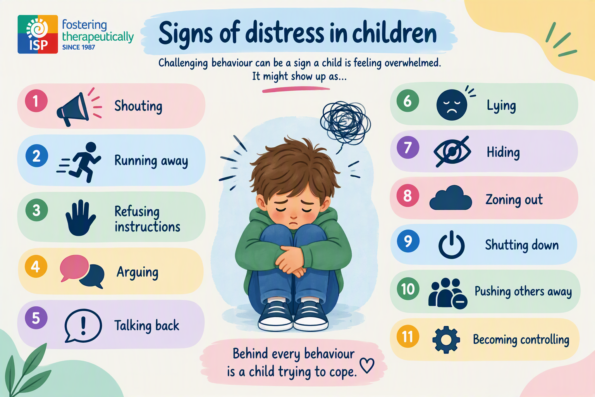
These behaviours can look like deliberate defiance, but they may be the child’s attempt to protect themselves from feeling unsafe, ashamed, trapped or overwhelmed. It doesn’t matter if the threat is perceived or real.
For example, a child who refuses to start their work may not be lazy; they could be frightened of failure. A child who argues with every adult may be trying to avoid feeling powerless. And a child who laughs when being told off may not find it funny; they may be anxious, embarrassed or disconnected from what they are feeling.
This does not mean that adults ignore behaviour or remove all expectations. It means they should respond with curiosity as well as boundaries. A trauma-informed response might sound like, “This behaviour is not okay, and I want to understand what happened so we can help you manage it differently next time.”
Not every behaviour is trauma
At the same time, it is important not to put every behaviour into a “trauma” box. Children’s behaviour can have many influencers, including neurodivergence, communication needs, sensory differences, learning difficulties, physical discomfort, tiredness, hunger, etc.
A trauma-informed approach does not mean assuming everything is trauma. It means staying curious about what might be underneath the behaviour before deciding how best to respond.
How do trauma responses differ by age?
Early years
In early years, trauma often shows through the body and behaviour.
Children may have periods of:
- Intense emotional and behavioural distress
- Separation anxiety
- Sleepiness
- Toileting difficulties
- Clinginess
- Aggression
- Sexualised behaviour
- Repetitive play
- Difficulty settling
They may not have the words to explain what they feel, so distress comes out through movement, crying, avoidance or play themes.
Primary years
Primary-aged children may show trauma through:
- Difficulties with friendships
- Emotional regulation
- Attention
- Learning and transitions
- They might also become:
- Controlling
- Perfectionistic
- Angry
- Withdrawn
- Overly compliant
They may find change particularly difficult and could need a lot of reassurance from adults, even when the situation appears ordinary or low risk. They might also regress to a younger developmental age (e.g. there might be wetting, talking in ‘baby-voice’ or clinginess).
Teenagers
Teenagers may present with:
- Risk-taking
- Unsafe sexual activities
- Self-harm
- Substance use
- School refusal
- Detachment
- Anger
- Numbness
- Anxiety
- Depression
- Difficulties trusting adults
In teens, trauma can sometimes be hidden behind humour, avoidance, bravado or apparent indifference. Adults may see a young person who “doesn’t care”, when underneath there may be shame, fear, grief or a belief that adults cannot be trusted.
How to help a child with trauma in school
The school’s role in supporting children and young people living with trauma starts by building relational safety.
Children who have experienced trauma need to feel that adults are predictable, emotionally steady and genuinely interested in understanding them. This does not mean having no boundaries. It means boundaries are held with calmness, clarity and care.
Relational safety also helps build epistemic trust. This means the child begins to experience adults as people who may have something useful, safe and relevant to offer. Many traumatised children have learned not to trust adults’ intentions, words or guidance. They may assume adults will shame them, reject them, misunderstand them or let them down. Before they can learn from adults, they often need repeated experiences of adults being reliable, fair and emotionally safe.
A child is more likely to learn, reflect and repair when they feel safe with the adults around them.
Schools should focus on building trusted relationships where the child knows: “This adult will not humiliate me, give up on me, or become frightening when I struggle.” Over time, this kind of relationship can become the foundation for learning, emotional regulation and change.
Coming soon: Part Two – What else can teachers and parents do?
Recognising the impact of trauma is an important first step, but what can you do next?
In Part Two, we’ll explore practical strategies that teachers and foster parents can use to support young people who have experienced trauma, helping to create the safety, stability and understanding they need to thrive at school.